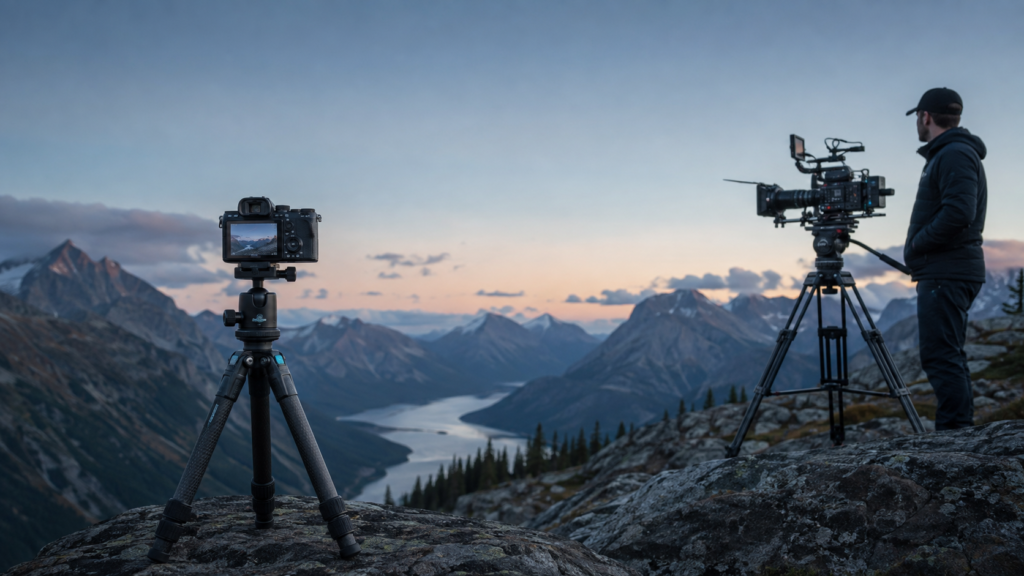
Choosing the best tripods for photography and video means balancing stability, portability, payload, working height, and the right tripod head for the way you shoot.
A tripod can seem like one of the least exciting pieces of camera equipment to buy—until camera movement ruins a long exposure, your composition shifts between product shots, or a supposedly smooth video pan turns into a visible jerk.
The right tripod does much more than hold a camera.
It can help you create sharper long exposures, maintain precise compositions, keep product and studio framing consistent, film stable talking-head videos, and execute controlled camera movement.
But there is one important distinction to understand before buying:
The best tripod for photography is not always the best tripod for video.
Photographers often prioritize stability, weight, folded size, low-angle flexibility, vertical shooting, and precise positioning.
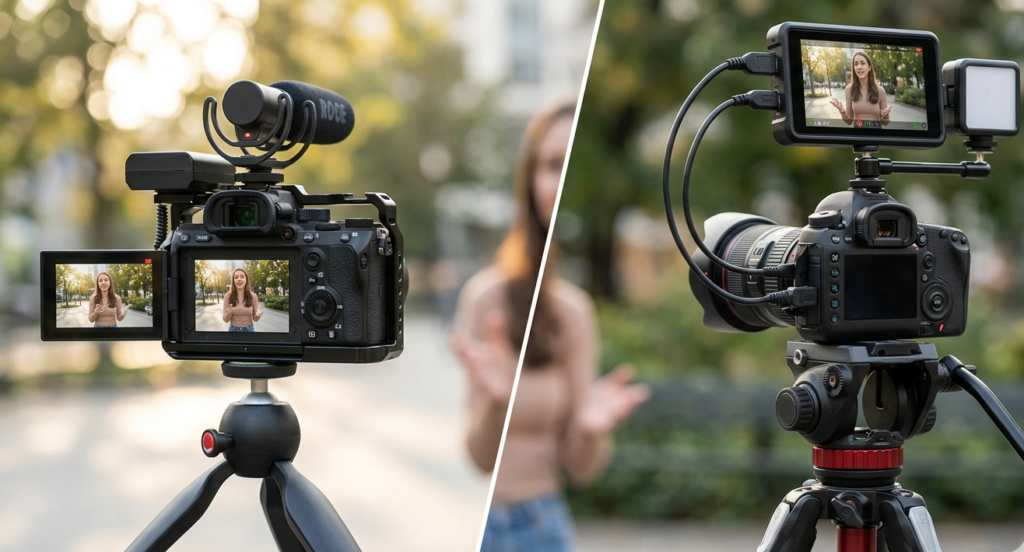
Videographers also need stability, but moving shots introduce additional requirements such as fluid drag, controlled panning, tilt resistance, sliding plates, and sometimes counterbalance.
That is why this guide separates travel tripods, photography systems, video tripods, professional supports, and hybrid options instead of pretending there is one universal winner.
If you are still building your wider camera setup, see our guide to the best camera for beginners as well.
Disclosure: This article contains Amazon affiliate links. As an Amazon Associate I earn from qualifying purchases.
Table of Contents
Best Tripods at a Glance
The table below focuses on the specifications most likely to affect a buying decision.
| Best For | Tripod | Weight | Max Height | Published Payload | Head Type | Material | Price Tier | Availability |
|---|---|---|---|---|---|---|---|---|
| Best overall for most photographers | Manfrotto Befree Advanced | 1.49 kg | 150 cm | 9 kg | Ball head | Aluminum | $$ | Current model |
| Best travel tripod | Peak Design Travel Tripod | 1.56 kg aluminum / ~1.29 kg carbon | 152.4 cm / 60 in | 20 lb / ~9.1 kg | Compact ball head | Aluminum or carbon | $$$ | Current |
| Best budget compact tripod | Vanguard VEO 3 GO 204AB Gen 2 | 2.1 lb / ~0.95 kg | 51.4 in / ~130.6 cm | 6.6 lb / ~3 kg | Ball head | Aluminum | $ | Available direct when checked |
| Best lightweight carbon travel alternative | Ulanzi Zero Y | 1.1 kg | 156.7 cm | 3 kg working head payload* | Integrated ball head | Carbon fiber + aluminum | $$ | Available direct when checked |
| Best travel tripod for video | Manfrotto Befree Live | 1.64 kg | 150 cm | 4 kg | Fluid video head | Aluminum | $$ | Current model |
| Best professional photography support | Benro Mach3 TMA38CL | 2.05 kg | 177 cm | 16 kg | Legs only | Carbon fiber | $$$ | Current model |
| Best heavy-duty video tripod | SmallRig FreeBlazer AD-80 | 4.38 kg | 191 cm | 8 kg head / 15 kg legs | Fluid head | Aluminum | $$$ | Current model; regional stock varies |
| Best premium hybrid system | Peak Design Pro Tripod | Varies by Pro model | Varies by Pro model | Model/configuration dependent | Modular ball-head system | Carbon fiber | $$$$ | Current |
*Ulanzi separately lists a 3 kg working payload and 5 kg maximum for the Zero Y ball head. Do not confuse the center-column rating with the practical head payload.
Price tier guide:
$= budget/entry level,$$= mid-range,$$$= premium, and$$$$= professional/high-end. These tiers are comparative rather than live price quotes.
The specifications above are based on current manufacturer information checked in August 2026. For example, Manfrotto currently lists the Befree Advanced at 1.49 kg, 150 cm and a 9 kg safety payload, while Vanguard lists the VEO 3 GO 204AB Gen 2 at 2.1 lb, 51.4 inches and a 6.6 lb maximum load.
Compare Our Top Tripod Picks
Choose any two tripods to compare their specifications, ideal uses, strengths, limitations, availability, and current retailer options.
On smaller screens, swipe horizontally to view the full comparison.
Our Top Tripod Picks
1. Manfrotto Befree Advanced — Best Overall for Most Photographers
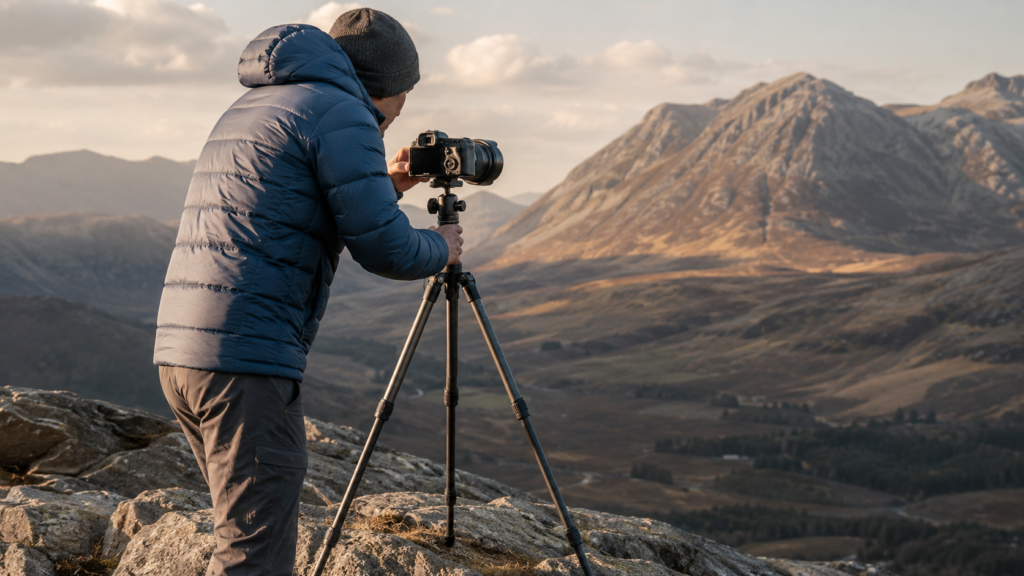
The Manfrotto Befree Advanced is our best starting point for photographers who want a conventional, portable tripod without moving into an unusually specialized design.
The current aluminum twist-lock configuration weighs 1.49 kg, reaches 150 cm, folds to 40 cm, includes a ball head, and carries a manufacturer-listed 9 kg safety payload. Its maximum height with the center column down is 127 cm.
Why It Stands Out
The Befree Advanced occupies a useful middle ground.
It is compact enough for travel but retains familiar tripod controls and conventional photography ergonomics.
That makes it particularly attractive to someone buying a first serious tripod who does not yet know whether ultralight travel, studio work, landscapes, or general photography will become the dominant use.
Best For
- General photography
- Landscape photography
- Travel
- Mirrorless cameras
- DSLR cameras
- Long exposures
- Enthusiast photographers
Pros
- 150 cm maximum height
- 127 cm maximum height with the center column down
- Compact 40 cm closed length
- Ball head included
- 9 kg manufacturer safety payload
- Independent pan control
- Aluminum and carbon-fiber configurations available
- Carrying bag included
Cons
- Ball head is photography-oriented
- No fluid pan drag
- A full-size professional system may be preferable for large telephoto equipment
Verdict
For most photographers who want a traditional, versatile tripod that is still practical to travel with, the Befree Advanced is one of the most balanced choices in this guide.
Availability: Current Manfrotto product; retailer inventory varies.
Manufacturer specifications: Manfrotto Befree Advanced
2. Peak Design Travel Tripod — Best Travel Tripod
Peak Design approached the travel-tripod problem differently.
Instead of simply shortening a conventional tripod, the company redesigned how the folded legs, center column, and head fit together.
Peak Design says the Travel Tripod deploys to 60 inches and supports 20 lb while packing to approximately the diameter of a water bottle. The aluminum version weighs about 1.56 kg, while Peak Design’s support documentation puts the carbon version at about 1.29 kg.
Why It Stands Out
Its biggest advantage is not maximum payload.
It is packing efficiency.
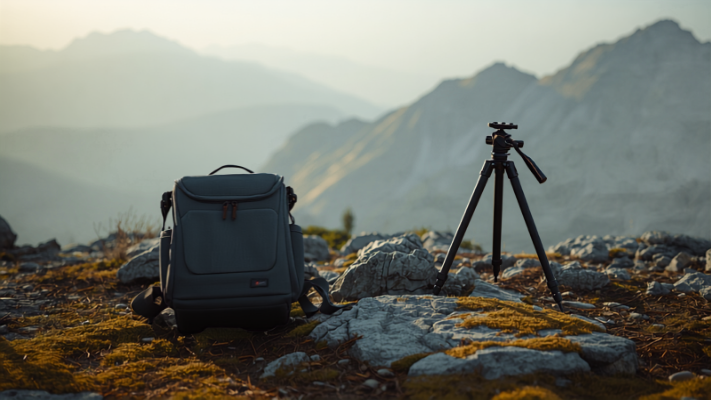
If your tripod constantly competes with lenses, clothing, filters, batteries, and other gear for room in a backpack or carry-on, reducing wasted folded volume can materially change whether you bring it.
Best For
- Travel photography
- Hiking
- Landscape photography
- Mirrorless cameras
- Full-frame travel setups
- Frequent flyers
- Minimal camera kits
Pros
- Extremely space-efficient folded architecture
- 60-inch deployed height
- 20 lb manufacturer-listed capacity
- Aluminum and carbon-fiber versions
- Integrated mobile mount
- Low-angle modes
- Compact integrated ball head
Cons
- Expensive, particularly in carbon fiber
- Integrated head differs from conventional ball-head ergonomics
- Primarily photography-oriented
- Not a substitute for a true fluid video head
Verdict
Choose the Peak Design Travel Tripod when size and carrying convenience are the primary reasons you normally leave a tripod at home.
The aluminum model currently sits below the carbon version in price, so consider whether reducing approximately a quarter kilogram of carrying weight justifies the additional cost for your use. Peak Design currently lists both versions for purchase.
Availability: Current model.
Manufacturer specifications: Peak Design Travel Tripod
3. Vanguard VEO 3 GO 204AB Gen 2 — Best Budget Compact Tripod
A useful tripod does not automatically require premium carbon fiber.
The Vanguard VEO 3 GO 204AB Gen 2 is a compact aluminum kit designed for lighter cameras and travel.
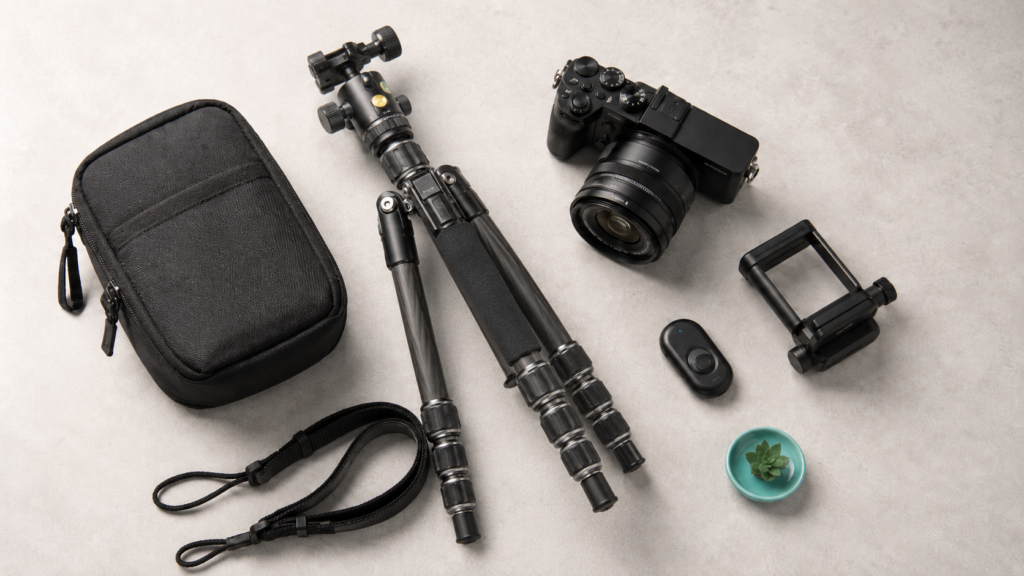
Vanguard currently lists it at 2.1 lb, with a 13.4-inch folded length, 51.4-inch extended height, 6.6 lb maximum load, and an included Arca-compatible BH-45 ball head. The kit also includes a smartphone holder, Bluetooth remote, and tripod bag.
Why It Stands Out
It delivers a complete support kit rather than requiring beginners to immediately buy a separate head or phone adapter.
At the time of our August 2026 check, Vanguard listed it at $139.99 on its U.S. site and offered direct purchase. Prices can change.
Best For
- Beginners
- Lightweight mirrorless cameras
- Compact DSLR kits
- Travel
- Smartphone content creation
- Buyers on a tighter budget
Pros
- Lightweight at approximately 0.95 kg
- Very compact 13.4-inch folded length
- Arca-compatible ball head included
- Smartphone holder included
- Bluetooth remote included
- Three leg-angle positions
- Carrying bag included
Cons
- 6.6 lb payload is much lower than heavier photographic systems
- 51.4-inch maximum height is relatively modest
- Not ideal for substantial telephoto or cinema rigs
- Ball head is not designed for fluid video pans
Verdict
This is the tripod to consider when you have a light camera setup and want a complete, compact support system without moving into premium pricing.
Availability: Available direct from Vanguard when checked August 8, 2026.
Manufacturer specifications: Vanguard VEO 3 GO 204AB Gen 2
4. Ulanzi Zero Y — Best Lightweight Carbon Travel Alternative
The Ulanzi Zero Y earns a place here because it provides another answer to the compact carbon-tripod problem without duplicating the premium positioning of Peak Design.
Ulanzi currently lists the Zero Y at 1.1 kg, with a 42.3 cm storage length, 156.7 cm maximum height, 132.7 cm height with the center column down, and a three-kilogram working payload for the integrated ball head. The head is Arca-compatible.
Why It Stands Out
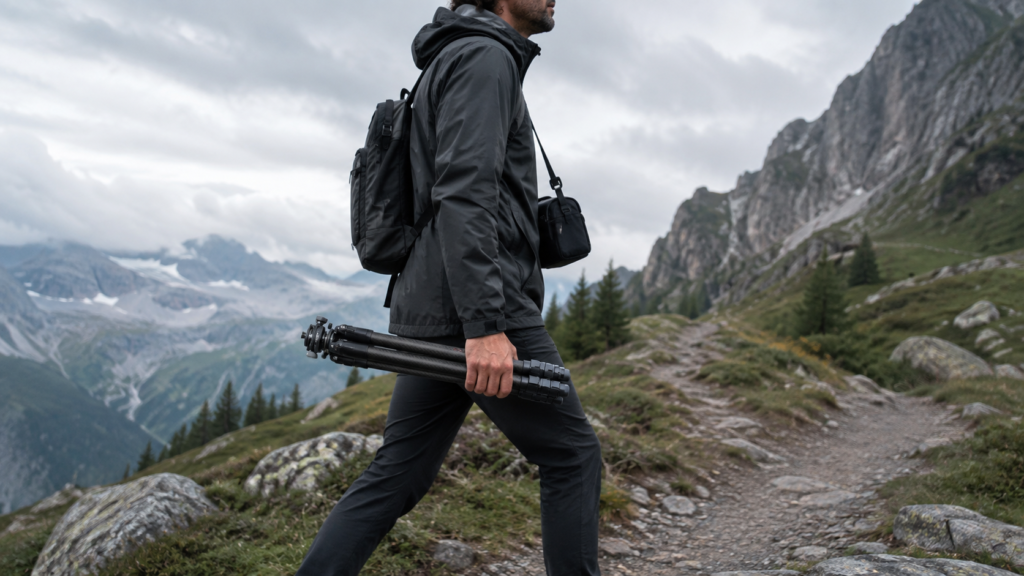
A 1.1 kg weight is attractive for photographers who carry their equipment over longer distances.
It also supports low-angle configurations, panoramic positioning, vertical shooting, and a 1/4-inch accessory mounting point.
Best For
- Travel photographers
- Hikers
- Lightweight mirrorless kits
- Landscape photography
- Macro and low-angle photography
- Creators prioritizing low carried weight
Pros
- 1.1 kg tripod weight
- 42.3 cm storage length
- 156.7 cm maximum height
- 132.7 cm with center column down
- Arca-compatible clamp
- Low-angle configuration
- Carbon-fiber and aluminum construction
- Accessory mounting point
Cons
- The practical ball-head working payload is more modest than the large headline structural ratings
- Integrated head is not directly detachable without an additional center-column accessory
- Not intended as a heavy telephoto or cinema support
- Ball head remains photography-focused
Verdict
The Zero Y makes sense for someone who wants carbon-based travel construction, low weight, conventional Arca compatibility, and a lower entry point than some premium travel systems.
Ulanzi listed the standard Zero Y for purchase at $279.95 when checked in August 2026, though pricing and bundles may change.
Availability: Available direct from Ulanzi when checked August 8, 2026.
Manufacturer specifications: Ulanzi Zero Y
5. Manfrotto Befree Live — Best Travel Tripod for Video
The Manfrotto Befree Live demonstrates why photography and video should not be treated as identical tripod use cases.
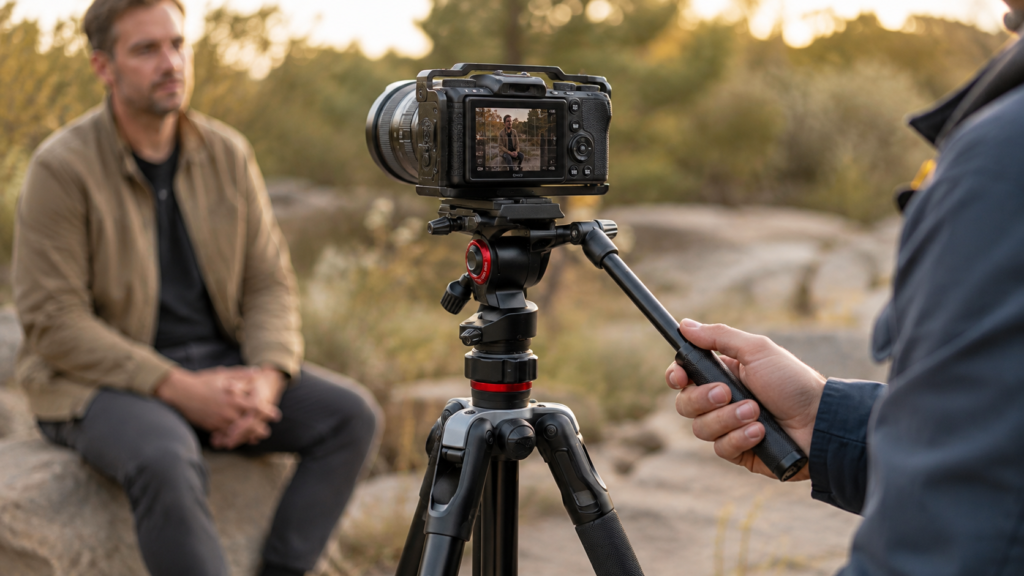
Instead of pairing its travel legs with a photography ball head, Manfrotto uses a dedicated fluid video head.
The current twist-lock kit weighs 1.64 kg, reaches 150 cm, folds to 40 cm, and has a manufacturer-listed 4 kg safety payload. The head includes a pan bar, fixed fluid drag for pan and tilt, and a 501PL video plate.
Why It Stands Out
A ball head works well when your objective is:
Point camera → lock position → take picture.
Moving video is different.
When you pan or tilt while recording, resistance, consistency, and control become visible parts of the shot.
Best For
- YouTube
- Interviews
- Travel filmmaking
- Small mirrorless video rigs
- Documentary-style shooting
- Run-and-gun creators
Pros
- Dedicated fluid video head
- Pan handle included
- Fluid drag for pan and tilt
- Compact 40 cm folded size
- 150 cm maximum height
- Sliding video plate
- Carrying bag included
Cons
- 4 kg safety payload limits larger rigs
- Not designed for substantial cinema builds
- Less convenient for portrait-orientation still photography than many ball heads
Verdict
If you need a tripod that remains travel-friendly but video movement actually matters, the Befree Live is a much more logical choice than buying a photography tripod and expecting its ball head to behave like a fluid head.
For situations where you do not need tripod-based movement at all, see our guide on how to shoot smooth handheld video without a gimbal.
Availability: Current Manfrotto model; retailer availability varies.
Manufacturer specifications: Manfrotto Befree Live
6. Benro Mach3 TMA38CL — Best Professional Photography Support
Travel tripods deliberately make compromises.
If your priorities shift toward longer lenses, larger cameras, greater working height, and stronger photographic support rather than the smallest possible packed size, a full-size tripod becomes more attractive.
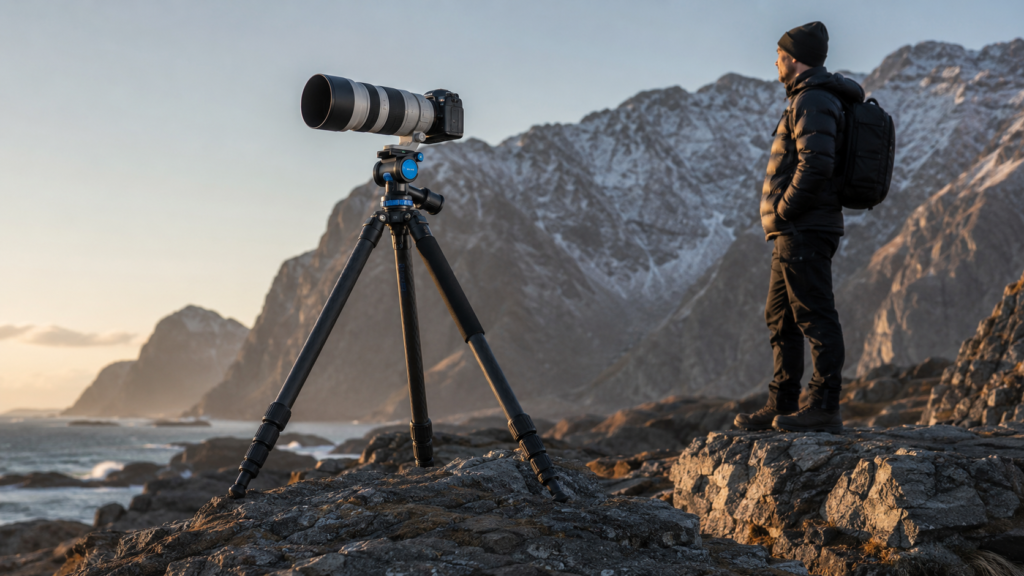
The Benro Mach3 TMA38CL uses four-section carbon-fiber legs, reaches 177 cm, folds to 59 cm, weighs 2.05 kg, and carries a manufacturer-listed 16 kg maximum payload. Benro also includes a short column and spiked feet.
This is a legs-only system, so you choose the tripod head separately.
Why It Stands Out
The Mach3 gives you something compact travel systems cannot fully replicate:
more physical support.
Its larger dimensions, stronger legs, and independent head choice are better suited to photographers who want to optimize around their camera and lens rather than around airline luggage.
Best For
- Landscape photography
- Architecture
- Studio work
- Full-frame systems
- Longer telephoto lenses
- Professional photography
- Photographers who want to select their own head
Pros
- 177 cm maximum height
- 16 kg manufacturer-listed capacity
- Carbon-fiber legs
- Four-section construction
- Short column included
- Spiked feet included
- Standard 3/8-inch head mount
Cons
- 59 cm folded length
- 2.05 kg before adding a head
- Head must be purchased separately
- Excessive for lightweight casual camera kits
Verdict
If stability, height, and system flexibility matter more than carry-on dimensions, the Mach3 TMA38CL represents the full-size professional photography approach missing from many travel-heavy buying guides.
Benro listed the legs at $449.95 when checked in August 2026, although current pricing should always be verified before purchase.
Availability: Current Benro product; check live stock.
Manufacturer specifications: Benro Mach3 TMA38CL
7. SmallRig FreeBlazer AD-80 — Best Heavy-Duty Video Tripod
Video rigs can become heavy surprisingly quickly.
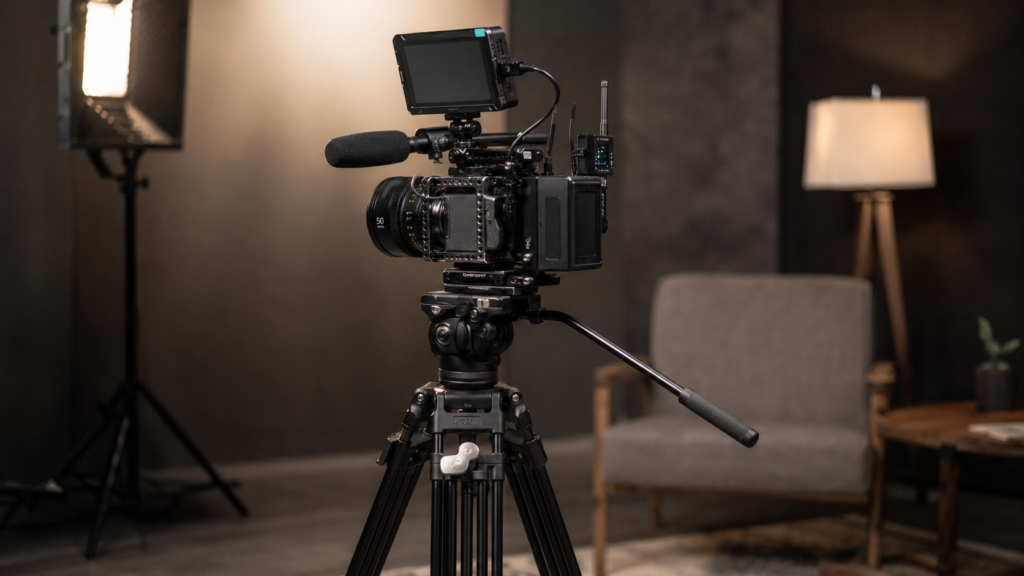
A compact camera body may turn into a much larger system after you add:
- Cinema lens
- Cage
- External monitor
- Battery
- Microphone
- Wireless receiver
- Follow-focus hardware
- Handles and mounting accessories
The SmallRig FreeBlazer AD-80 is built for this type of workload.
SmallRig lists the aluminum tripod kit at 4.38 kg, with an 87–191 cm working range, a 15 kg tripod-leg capacity, and an 8 kg head capacity. The fluid head provides damped 360-degree panning, +90/-65-degree tilt, preset counterbalance, and a quick-release system.
Why It Stands Out
This belongs to a fundamentally different category from a lightweight travel tripod.
The additional mass hurts portability, but it also reflects a support system built around larger video rigs, controlled movement, and production use.
Best For
- Larger mirrorless video rigs
- Cinema-style configurations
- Interviews
- Studio production
- Commercial video
- Controlled pan and tilt movement
Pros
- Dedicated fluid head
- 8 kg head capacity
- 15 kg tripod-leg capacity
- Counterbalance system
- Up to 191 cm working height
- Detachable pan handle
- Double-row aluminum tubes
- Carrying bag included
Cons
- 4.38 kg system weight
- 90.5 cm folded length
- Poor choice for lightweight travel
- More support than many casual YouTubers need
Verdict
Choose the AD-80 when your priority has shifted from “How little tripod can I carry?” to “How confidently can I support and move my complete video rig?”
Availability: Current product; stock and purchase options vary by region.
Manufacturer specifications: SmallRig FreeBlazer AD-80
8. Peak Design Pro Tripod — Best Premium Hybrid System
Peak Design’s newer Pro Tripod family sits above the company’s Travel Tripod.
It currently includes Pro Lite, Pro, and Pro Tall variants. Peak Design positions the system around greater stability for heavier camera and lens combinations while retaining a relatively packable architecture. The company also explicitly promotes the platform for moving between still photography and motion workflows.
The standard Pro model was listed at $899.95 when checked, while Pro Lite and Pro Tall were shown at different price points.
Why It Stands Out
Hybrid creators traditionally face an awkward choice:
Buy a photo tripod optimized around a ball head, or buy a video tripod optimized around fluid movement.
Peak Design’s Pro ecosystem takes a more modular route.
An optional Pro Leveling Base allows Pro, Pro Lite, and Pro Tall legs to work with third-party tripod heads, which is particularly useful if you want to add a specialized video head.
Best For
- Professional hybrid creators
- Heavier cameras and lenses
- Photography/video teams
- Premium gear buyers
- Creators who want one adaptable support ecosystem
Pros
- Three Pro configurations
- Carbon-fiber professional platform
- Modular accessory ecosystem
- Designed around heavier professional camera setups
- Can accept specialized third-party heads with the leveling-base accessory
- Built for stills-to-motion workflows
Cons
- Very expensive
- Excessive for beginners
- Additional modules increase total cost
- A dedicated video tripod can remain preferable for video-first productions
Verdict
The Pro Tripod family is worth investigating when you want one premium support platform that can evolve between professional still photography and motion work rather than optimizing exclusively for low weight or low cost.
Availability: Current Peak Design range; Pro Lite, Pro, and Pro Tall configurations are listed.
Manufacturer specifications: Peak Design Pro Tripod
How We Selected These Tripods
This edition of the guide uses a research-based selection methodology.
We reviewed current manufacturer specifications, product configuration, intended use, support capacity, tripod and head architecture, portability, working height, low-angle flexibility, and how clearly each tripod solves a specific buyer problem.
Our evaluation considers:
- Stability potential and support architecture
- Manufacturer-listed payload
- Head capacity where it differs from leg capacity
- Maximum working height
- Height with the center column lowered where available
- Folded dimensions
- Total system weight
- Head type
- Pan and tilt capabilities
- Low-angle flexibility
- Quick-release system
- Material
- Portability
- Modularity
- Current product status and availability
- Suitability for photography, video, or hybrid use
- Relative value within its category
Manufacturer payload ratings are useful comparison points, but they are not guarantees of perfect performance at the published maximum.
Rig geometry matters.
A long telephoto lens can apply more leverage to a head than a compact camera setup with similar total weight.
The same principle applies to video rigs: the tripod legs may support substantially more weight than the fluid head mounted above them.
What Makes a Good Camera Tripod?
A good tripod balances several competing requirements.
Stability
The first job of a tripod is to reduce unwanted camera movement.
That becomes particularly important for:
- Long exposures
- Telephoto lenses
- Macro photography
- High-resolution cameras
- Night photography
- Timelapses
- Video
Tripod stability also helps you concentrate on composition instead of constantly correcting framing. If you are learning photography, see our guide to photography composition rules every beginner should learn.
Portability
A tripod that never leaves your home cannot stabilize a camera on location.
Travel photographers should therefore pay close attention to:
- Weight
- Folded length
- Folded diameter
- Setup speed
- How the tripod fits into or onto a camera bag
This is also why your carrying system matters. A good tripod choice should work with the way you actually transport your gear, so consider it alongside your camera bag or backpack.
Working Height
Do not look only at the advertised maximum height.
Check the height with the center column lowered as well.
For example, Manfrotto lists the Befree Advanced at 150 cm fully extended but 127 cm with the center column down.
That distinction matters because the center column effectively becomes a narrower support extending above the main leg structure.
Payload
Calculate the weight of your complete camera configuration, not simply the camera body.
That may include the:
- Camera
- Lens
- Tripod head
- Camera cage
- External monitor
- Microphone
- Battery
- Wireless receiver
- Follow focus
- Other accessories
Then consider how that weight is distributed.
A large lens extending forward can stress a head differently from a compact camera body positioned directly above it.
Tripod Head
The head determines how the camera is positioned and moved.
For photography, the most common choices include:
- Ball heads
- Three-way heads
- Geared heads
For moving video, fluid heads are generally more suitable.
This is one of the most important distinctions in the entire buying process.
Tripod Specifications Explained
Weight
Tripod weight affects portability, but “lighter” should not automatically be read as “better.”
The Vanguard in this guide weighs less than one kilogram, while the SmallRig AD-80 weighs more than four kilograms.
Those tripods are not trying to solve the same problem.
Maximum Height
A taller tripod can be valuable if you:
- Are tall
- Film standing subjects
- Shoot over obstacles
- Work on steep terrain
- Need elevated camera positions
But height can also increase folded dimensions, weight, or the number of leg sections.
Height With the Center Column Down
This is often more useful than the headline maximum height.
If you regularly shoot long exposures or use longer lenses, check whether the tripod remains comfortable to use without raising the center column.
Folded Length
Folded length matters especially for air travel, hiking, and smaller camera bags.
Measure the actual compartment or exterior tripod straps you plan to use before buying.
Payload
Do not confuse:
leg payload, head payload, and ideal practical working capacity.
They are not always the same.
SmallRig, for example, lists a 15 kg capacity for the AD-80 tripod but an 8 kg capacity for its included head.
Leg Sections
More sections usually allow a tripod to fold shorter.
The trade-off is additional joints and progressively narrower lower leg tubes.
Center Column
A center column provides convenient height adjustment.
For maximum rigidity, however, avoid extending it more than necessary.
Leg Locks
The two most common systems are twist locks and flip locks.
Twist locks are compact and minimize protruding hardware.
Flip locks give immediate visual feedback about whether a section is open or closed.
Neither is universally superior.
Quick-Release System
Check whether the head uses an industry-standard or proprietary camera plate.
Arca-compatible clamps are widespread in still photography.
Video heads frequently use longer sliding plates that allow the camera to move forward or backward so the rig can be balanced correctly.
Photography Tripod vs Video Tripod: What Is the Difference?
The most important difference is usually the head.
| Feature | Photography Tripod | Video Tripod |
| Typical head | Ball, geared or three-way | Fluid |
| Main goal | Lock precise composition | Support controlled camera movement |
| Smooth panning while recording | Secondary | Important |
| Tilt resistance | Usually secondary | Important |
| Counterbalance | Rare | Useful on larger systems |
| Sliding camera plate | Sometimes | Common |
| Vertical photo orientation | Usually easy | Often less convenient |
| Bowl or leveling system | Less common | Common on professional video systems |
| Typical shooting behavior | Position and lock | Move while recording |
Can One Tripod Work for Both?
Yes, but there are compromises.
If your video is mostly static—talking heads, livestreams, products, or locked-off interview angles—a photography tripod can work.
If you regularly pan or tilt during a shot, a fluid head becomes much more valuable.
Hybrid creators can also buy tripod legs with interchangeable heads or a leveling platform and reconfigure the support system for photography or video.
Carbon Fiber vs Aluminum Tripods
Both materials can produce excellent tripods.
Choose Aluminum If
- Budget matters
- You rarely carry the tripod long distances
- A little extra weight is acceptable
- You want strong value from a conventional design
Choose Carbon Fiber If
- You hike frequently
- You fly with camera equipment
- You carry your gear for hours
- Lower carried weight increases the likelihood that you will actually bring the tripod
The Peak Design comparison illustrates the trade-off well: its aluminum Travel Tripod is about 1.56 kg while its carbon version is around 1.29 kg, according to Peak Design support information.
Carbon fiber should not be treated as a substitute for good tripod engineering.
Ball Head vs Fluid Head
Choose a Ball Head for Photography When You Need
- Fast recomposition
- Landscape photography
- Portraits
- Architecture
- Product photography
- Long exposures
- Travel photography
- Easy portrait orientation
Choose a Fluid Head for Video When You Need
- Interviews
- Documentary shooting
- YouTube production
- Controlled pans
- Controlled tilts
- Telephoto video
- Cinema-style camera movement
Choose an Interchangeable System If You Regularly Do Both
Good tripod legs paired with different heads can sometimes make more sense than asking one head to perform two fundamentally different jobs.
If you are deciding whether tripod-based movement is necessary for your shooting style at all, compare it with smooth handheld video techniques.
Best Tripods for Photography and Video Type by Use Case
| Shooting Style | What to Prioritize | Suitable Type |
| Travel photography | Low weight and short folded dimensions | Travel tripod |
| Landscape photography | Rigidity, comfortable height and low-angle flexibility | Stable photo tripod |
| Long exposures | Low vibration and minimal center-column use | Stable photo tripod |
| Astrophotography | Stability and easy controls in darkness | Stable photo tripod |
| Wildlife | Strong legs and support for long lenses | Heavy-duty photography tripod |
| Studio photography | Stability and comfortable working height | Full-size tripod |
| Product photography | Repeatable framing and precise head control | Photo tripod with suitable head |
| Architecture | Rigidity and precise leveling | Full-size/geared setup |
| YouTube | Easy setup and appropriate head for the shot | Travel or video tripod |
| Interviews | Fluid movement and stable framing | Fluid-head video tripod |
| Filmmaking | Fluid drag, counterbalance and robust legs | Dedicated video system |
| Smartphone content | Compact setup and phone compatibility | Compact creator tripod |
| Hybrid photo/video | Interchangeable or adaptable head system | Modular tripod |
How to Choose the Right Tripod
Before buying, answer these questions.
1. What Does Your Complete Camera Setup Weigh?
Include the lens and every accessory you expect the tripod to support.
2. What Is Your Heaviest Lens?
A long lens changes the leverage acting on the support system even when its raw weight looks manageable.
3. Are You Shooting Photography, Video, or Both?
This should strongly influence your choice of head.
4. Do You Need to Move the Camera While Recording?
If yes, investigate fluid heads rather than standard ball heads.
5. How Far Will You Carry the Tripod?
A six-hour mountain hike and a studio shoot create very different buying priorities.
6. How Tall Does It Need to Be?
Check maximum height and height with the center column lowered.
7. How Small Must It Pack?
Measure your backpack, suitcase, or tripod compartment.
8. Will Your Camera System Grow?
A tripod purchased only for today’s lightweight camera may become limiting if you later add a heavier full-frame body or telephoto lens.
9. What Does Your Budget Need to Include?
Do not forget:
- Tripod head
- Quick-release plates
- L-brackets
- Spiked feet
- Carrying case
- Leveling base
- Other required accessories
10. Are You Buying Specifications or Actual Utility?
The best tripod is not necessarily the model with the biggest load number.
It is the model that fits your complete gear, shooting technique, transportation needs, and workflow.
Common Tripod Buying Mistakes
Buying Solely by Maximum Payload
Payload is only one specification.
Height, leg rigidity, head quality, weight distribution, lens leverage, and intended use matter too.
Buying the Lightest Tripod Available
Low weight is useful only when the support remains appropriate for your camera and shooting environment.
Buying a Ball Head for Moving Video
A ball head can hold a video camera.
That does not make it a fluid video head.
Paying for Carbon Fiber You Do Not Need
If your tripod lives in a studio or vehicle, a heavier aluminum system may deliver better value.
Buying a Tripod You Hate Carrying
Portability is not merely a specification.
It directly affects whether the tripod is present when you need it.
Ignoring the Head
Excellent legs paired with the wrong head can still create a frustrating system.
Extending the Center Column Automatically
Set the legs to the required height first.
Raise the center column only when you actually need the additional adjustment.
Buying Around the Camera Body Alone
Your lens may have a greater influence on support requirements than the body.
Tips for Sharper Photos With a Tripod
For maximum stability:
- Extend the thicker leg sections before the thinnest sections where practical.
- Keep the center column low when additional height is unnecessary.
- Make sure each foot has secure contact with the ground.
- Avoid touching the camera during long exposures.
- Use a shutter timer or remote release when useful.
- Follow your camera and lens manufacturer’s recommendations for stabilization when tripod-mounted.
- Protect lightweight tripods from strong wind where possible.
- Recheck framing and focus after adjusting the legs or head.
- Avoid hanging a bag where strong wind will make it swing.
- Rebalance long lenses around their tripod collar when one is provided.
Tripod stability improves capture consistency, but the camera itself still determines how much highlight and shadow information you can retain.
Frequently Asked Questions
What Is the Best Tripod for Photography?
The best tripod depends on your camera, lens, shooting style, required height, and how far you carry your equipment.
For most enthusiasts, the Manfrotto Befree Advanced provides a strong balance of travel-friendly dimensions and conventional photography controls.
For larger lenses and professional work, a full-size system such as the Benro Mach3 TMA38CL offers more substantial support.
What Is the Best Tripod for Video?
For video that includes camera movement, prioritize a fluid head.
The Manfrotto Befree Live suits smaller travel-oriented video setups, while the SmallRig AD-80 provides a larger support system for heavier rigs. Manfrotto lists a 4 kg safety payload for the Befree Live, while SmallRig lists an 8 kg head capacity for the AD-80.
Can I Use the Same Tripod for Photography and Video?
Yes.
A photography tripod works well for static video.
If you need smooth pans and tilts, however, a fluid head or interchangeable-head system is generally more suitable.
What Is the Difference Between a Photography Tripod and a Video Tripod?
A photography tripod usually prioritizes fast positioning and rigidly locking a composition.
A video tripod typically adds a fluid head designed to create controlled resistance while panning or tilting during recording.
Is Carbon Fiber Worth the Extra Cost?
It is easiest to justify when carried weight matters.
Frequent travelers and hikers may benefit more than photographers whose tripod spends most of its time in a studio or vehicle.
How Much Tripod Payload Do I Need?
First calculate the weight of your complete camera, lens, and accessories.
Then consider balance, lens length, head capacity, and operating conditions rather than using the manufacturer’s maximum rating as your target working load.
How Tall Should a Camera Tripod Be?
The tripod should bring your camera close to a comfortable working position without forcing you to extend the center column unnecessarily.
Check the manufacturer’s center-column-down height, not just the headline maximum.
Do Mirrorless Cameras Need Tripods?
Not inherently.
A mirrorless camera can still benefit enormously from a tripod for landscapes, architecture, long exposures, astrophotography, product photography, self-portraits, interviews, and video.
Is a Ball Head Good for Video?
A ball head works for static framing.
It is generally less suitable for controlled movement during recording because it is not designed to provide the same fluid resistance as a video head.
Are Expensive Tripods Worth It?
They can be when the additional cost purchases something you genuinely need, such as:
Lower carried weight
Better rigidity
Smoother head control
Greater working height
More modularity
Replaceable parts
Better long-term system compatibility
Paying more for specifications you will never use does not automatically improve your photography.
What Tripod Is Best for a 70–200mm Lens?
Prioritize more than the combined camera and lens weight.
A 70–200mm lens creates leverage, so the head and legs need enough practical rigidity to control movement.
A larger system such as the Benro Mach3 is more aligned with substantial telephoto use than an ultralight compact tripod.
Should I Turn Image Stabilization Off When Using a Tripod?
There is no single rule that applies to every camera and lens.
Some stabilization systems detect tripod use automatically; others have manufacturer-specific recommendations.
Follow the instructions for your exact camera or lens rather than relying on a universal rule.
Sources and Specification Transparency
Exact specifications in this guide are checked primarily against manufacturer product pages rather than copied from retailer listings.
Primary product sources used for this edition include:
- Manfrotto — Befree Advanced
- Peak Design — Travel Tripod
- Vanguard — VEO 3 GO 204AB Gen 2
- Ulanzi — Zero Y
- Manfrotto — Befree Live
- Benro — Mach3 TMA38CL
- SmallRig — FreeBlazer AD-80
- Peak Design — Pro Tripod family
Manufacturer specifications may change as products are revised.
Availability and pricing can also change without notice, which is why editorial source links and retailer price links are kept separate.
Final Buying Advice
There is no single tripod that is best for every photographer and filmmaker.
The best buying decision comes from identifying what you are least willing to compromise.
For a conventional general-purpose photography tripod that remains reasonably travel-friendly, start with the Manfrotto Befree Advanced.
If minimizing packed bulk is the biggest priority, consider the Peak Design Travel Tripod.
If your budget is tighter and your camera setup is lightweight, the Vanguard VEO 3 GO 204AB Gen 2 offers a compact complete kit.
If you want a very lightweight carbon-based travel alternative, consider the Ulanzi Zero Y.
For travel video and smaller mirrorless systems, the Manfrotto Befree Live provides the fluid movement a normal photography ball head lacks.
For larger professional photography setups, the Benro Mach3 TMA38CL prioritizes height, capacity, and support over minimal packed dimensions.
For substantial video rigs, step into a dedicated system such as the SmallRig FreeBlazer AD-80.
And if you want a premium modular platform intended to move between serious still photography and motion work, investigate the Peak Design Pro Tripod family.
The most important buying rule is simple:
Buy for the complete camera-and-lens combination and shooting style you actually use—not just the camera body printed on a specification sheet.
A tripod you trust, understand, and willingly carry will create more value than a theoretically superior system that remains in a closet.
Before buying, compare the latest manufacturer specifications, retailer availability, warranty terms, included head, packed dimensions, and current price.
Next step: use the comparison tool above to narrow your shortlist to two models, then check the current retailer price for each before making your final decision.
This guide is based on product research, current manufacturer specifications, intended use, availability, and comparative buying criteria. Products described as researched recommendations have not necessarily been physically tested by Pixanded. See our methodology below.