For a beginner who wants to learn photography and occasionally record video, the Canon EOS R50 is a sensible first camera to compare. Its viewfinder, touchscreen and compact body suit that brief. Choose the Nikon Z50II if its controls and video options better match your plans, the Fujifilm X-T30 III if you prefer a compact camera with a tilting screen, or the Fujifilm X-S20 if sensor-shift stabilization is a priority.
These are starting points for a purchase decision. The best camera for beginners in 2026 depends on the lens you need, the complete kit cost and whether you enjoy using the camera.
How this guide was prepared: This is a research-based shortlist, using manufacturer specifications and manuals checked on 13 September 2026. We did not conduct hands-on comparative tests for this guide. Recommendations are editorial judgments about feature fit, not measured rankings of image quality, autofocus accuracy or reliability. This is a focused selection, not an exhaustive survey of every camera available worldwide.
Table of Contents
1. Choose the best camera for beginners by what you photograph
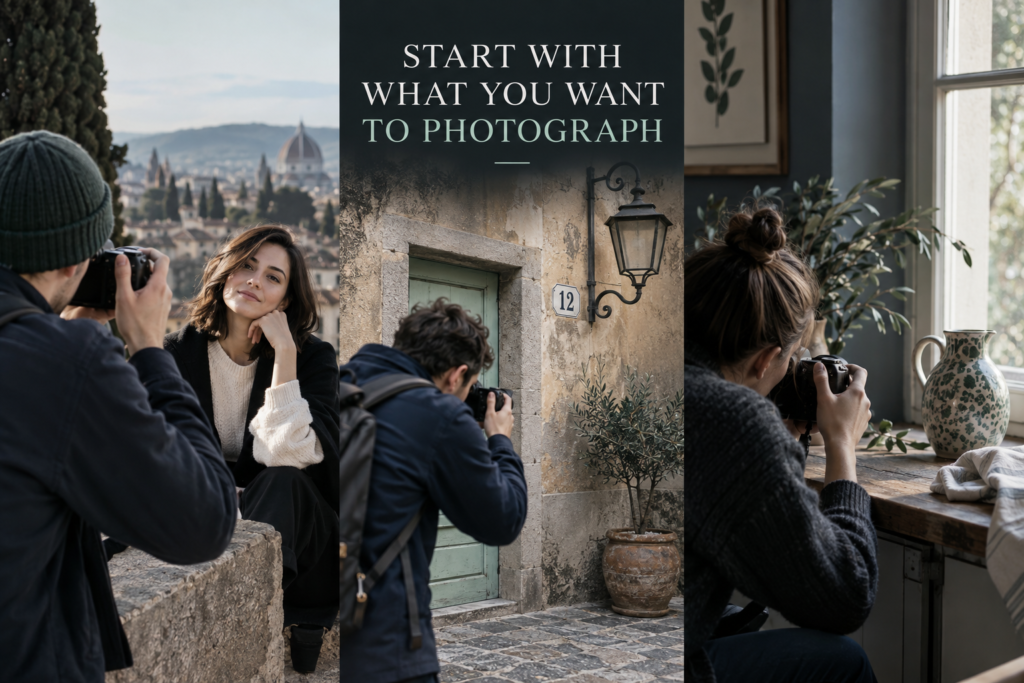
Before comparing models, finish this sentence: “Most weeks, I want to photograph [subjects], in [lighting conditions], and carry the camera [how and where].”
“Family and travel in daylight, in a small shoulder bag” produces a different shopping list from “indoor sport from the stands.” In the second case, the lens, available light and subject movement may dominate the budget.
| Your starting point | First option to compare | What could change the decision |
|---|---|---|
| Everyday photography with occasional video | Canon EOS R50 | Grip comfort, lens choice or a need for sensor-shift stabilization |
| A viewfinder camera for both photos and more involved video | Nikon Z50II | Carry weight and whether you will use the added video functions |
| A compact photo kit with a tilting screen | Fujifilm X-T30 III | Whether you need a screen that faces forward |
| Photos and video with sensor-shift stabilization | Fujifilm X-S20 | Whether the complete kit fits your budget |
| You already own suitable equipment | Keep it for a practice project | Upgrade only after identifying a specific limitation |
The model facts underlying these choices are linked in the comparison below. None of the options automatically makes better photographs in every situation.
2. Decide whether you need a camera yet
A dedicated camera becomes useful when you can identify a benefit you will use: changing lenses, composing through a viewfinder, learning exposure controls or working with files that suit your editing process.
If your main difficulty is choosing a subject, finding good light or composing a clear frame, practise those skills with the equipment you already have. A new body does not make those decisions for you.
Try a short assignment before shopping: make one environmental portrait, one detail and one wider scene of the same place. Review what prevented the result you wanted. Was it distracting composition, subject movement, camera shake, insufficient reach or difficulty seeing the screen?
Write down the limitation. “I need a longer lens for distant subjects” is a more useful buying requirement than “I need something professional.”
3. Compare four beginner cameras
All four models below use APS-C sensors and provide an electronic viewfinder. The weights include battery and memory card, but no lens; they should not be compared with body-only weights in retailer listings.
| Camera and official source | Effective resolution | Weight with battery/card | Decision-relevant feature |
|---|---|---|---|
| Canon EOS R50 | 24.2 MP | Approx. 375 g, black version | Viewfinder and touchscreen; no sensor-shift stabilization |
| Nikon Z50II | 20.9 MP | Approx. 550 g | Vari-angle screen; 4K/60p uses a crop |
| Fujifilm X-T30 III | 26.1 MP | Approx. 378 g | Tilting touchscreen; compact body |
| Fujifilm X-S20 | 26.1 MP | Approx. 491 g | Five-axis sensor-shift stabilization; vari-angle screen |
A small megapixel difference should rarely make this decision on its own. Compare the output you need, the lens and the experience of using the complete kit. The heavier camera may feel better balanced with a particular lens; the lighter one may be easier to carry regularly.
Canon EOS R50: a starting point for everyday photography
Start here if you want to learn still photography with a viewfinder and a small camera. Canon specifies subject detection for people, certain animals and vehicles, plus 4K recording up to approximately 30p. Those are useful capabilities to investigate; they do not guarantee sharp photographs of every moving subject.
The main limitation to understand is the absence of sensor-shift stabilization. Consider the stabilization in your chosen lens and practise holding the camera steadily. If you intend to use an external flash, verify the exact flash-and-shoe compatibility before ordering.
Choose it if: the controls feel comfortable and a suitable lens keeps the whole purchase within budget.
Look elsewhere if: sensor-shift stabilization or a different grip is essential.
Source: Canon EOS R50 specifications.
Nikon Z50II: compare it for a broader photo/video brief
The Z50II is worth trying if you want both viewfinder photography and room to explore video. Nikon lists subject detection for nine subject types, a vari-angle touchscreen, microphone input and headphone output. Its 4K/60p mode crops the image, so a lens that is wide enough for one recording mode may feel tighter in another.
At approximately 550 g before adding a lens, carrying the complete kit deserves a real trial.
Choose it if: you can explain how its handling and video functions help your planned work.
Look elsewhere if: a smaller kit is more likely to leave the house with you.
Source: Nikon Z50II specifications.
Fujifilm X-T30 III: compare it for a compact photography kit
The X-T30 III combines a viewfinder with a tilting touchscreen in a body weighing approximately 378 g with battery and card. A tilting screen can suit waist-level photography, but its movement differs from a forward-facing vari-angle screen.
Do a handling trial with the lens attached. Compact dimensions are helpful only if you can reach the controls comfortably and support the combination securely.
Choose it if: you prefer this control layout and screen arrangement for still photographs.
Look elsewhere if: filming yourself while monitoring a forward-facing screen is a frequent requirement.
Source: Fujifilm X-T30 III manual.
Fujifilm X-S20: compare it when stabilization matters
The X-S20 includes five-axis sensor-shift stabilization, a viewfinder and a vari-angle screen. It also offers separate microphone and headphone connections. That combination gives it a distinct place in this shortlist for someone learning both photography and video.
Stabilization can help with camera movement, but it cannot stop a walking person or a moving animal from blurring during a long exposure. You still need an appropriate shutter speed.
Choose it if: those features solve identified needs and leave enough budget for the lens.
Look elsewhere if: the extra body expenditure would force you to compromise the lens you actually need.
Source: Fujifilm X-S20 specifications.
What about the Sony ZV-E10?
If you already own one and it meets your needs, this revised shortlist is not a reason to replace it. The previous version of this guide treated one camera as the answer for almost every beginner. This version instead makes the buying requirements explicit.
For a video-first purchase, use a separate video-focused comparison and verify the exact model generation. A ZV-E10 and a ZV-E10 II listing should never be treated as the same product.
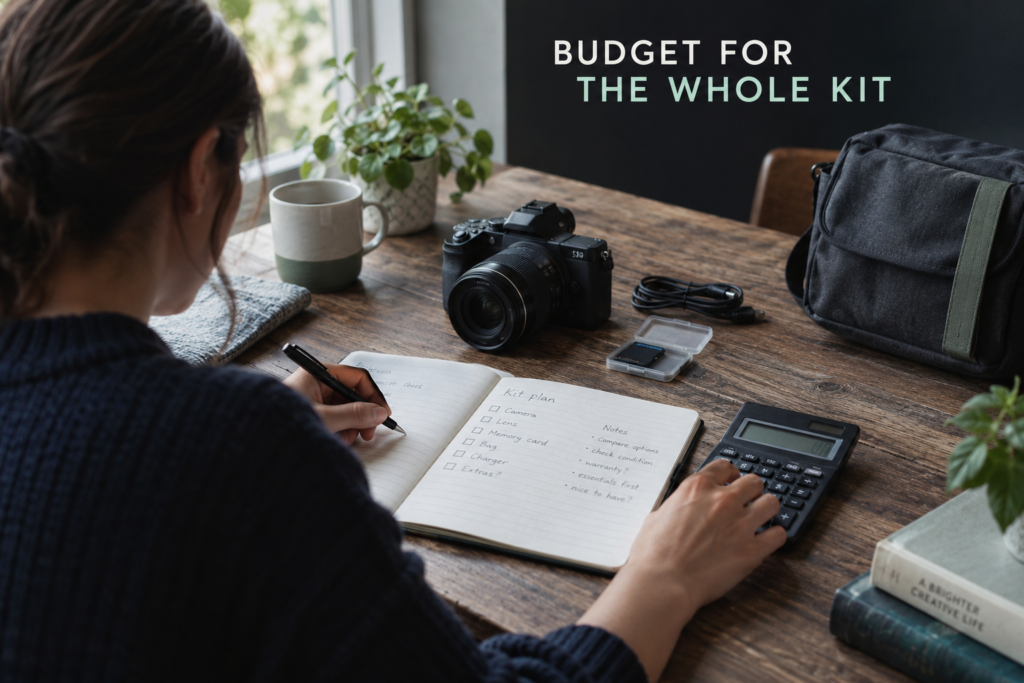
4. Budget for a usable kit
Set a total spending ceiling before looking at body prices. Include:
The camera and a compatible lens.
A suitable memory card.
Any necessary charging equipment not supplied.
A safe way to carry the equipment.
Tax, delivery and any applicable import costs.
Optional items only when the assignment requires them.
Start with a useful standard zoom unless you already know why a different lens is necessary. For example, Canon’s RF-S 18–45mm F4.5–6.3 IS STM and Fujifilm’s XC13–33mmF3.5–6.3 OIS are specific lenses to investigate in their respective systems, not interchangeable products or identical focal-range choices.
Read the complete kit listing. Two offers for the same camera may include different lenses, warranties or accessories.
A hypothetical USD budgeting example
Suppose your ceiling is $1,000 USD. The following are invented planning figures, not current prices for any shortlisted model.
| Item | Hypothetical allowance |
|---|---|
| Camera and suitable lens together | $800 |
| Memory card | $30 |
| Carrying protection | $40 |
| Reserve for tax, delivery or a missing essential | $130 |
| Total | $1,000 |
If the local kit quote is $920 instead, adding the same $30 card and $40 carrying protection leaves only $10. You must then check whether that covers the remaining costs. Reduce the purchase cost or revise the budget before checkout.
Use the same arithmetic in your own currency. Exchange-rate conversion alone does not establish the local retail price, warranty coverage or tax treatment.
A large accessory bundle is not automatically better value. Compare the price and usefulness of each included item; an unsuitable tripod or unnecessary filter still consumes budget.
5. Choose the lens around your first assignment
The lens affects framing, working distance and how much light you can collect. A camera body recommendation is incomplete until you identify the lens you will actually carry.
For travel and everyday scenes, rehearse with a standard zoom. For indoor portraits, consider how much space you have to step back. For distant sport or wildlife, investigate the required reach before buying the body.
A prime lens has a fixed focal length. It can be a good second purchase after your photographs reveal a repeated need, but you do not have to start with one.
Before buying, record:
Exact lens name and mount.
Whether it covers the camera’s sensor format.
Autofocus compatibility and any adapter requirement.
Whether stabilization is provided by the lens or body.
The combined weight and total cost.
Do not assume that a lens fits because the brand name matches. Check the manufacturer’s compatibility information for the exact camera, lens and adapter combination.
6. Use a handling scorecard
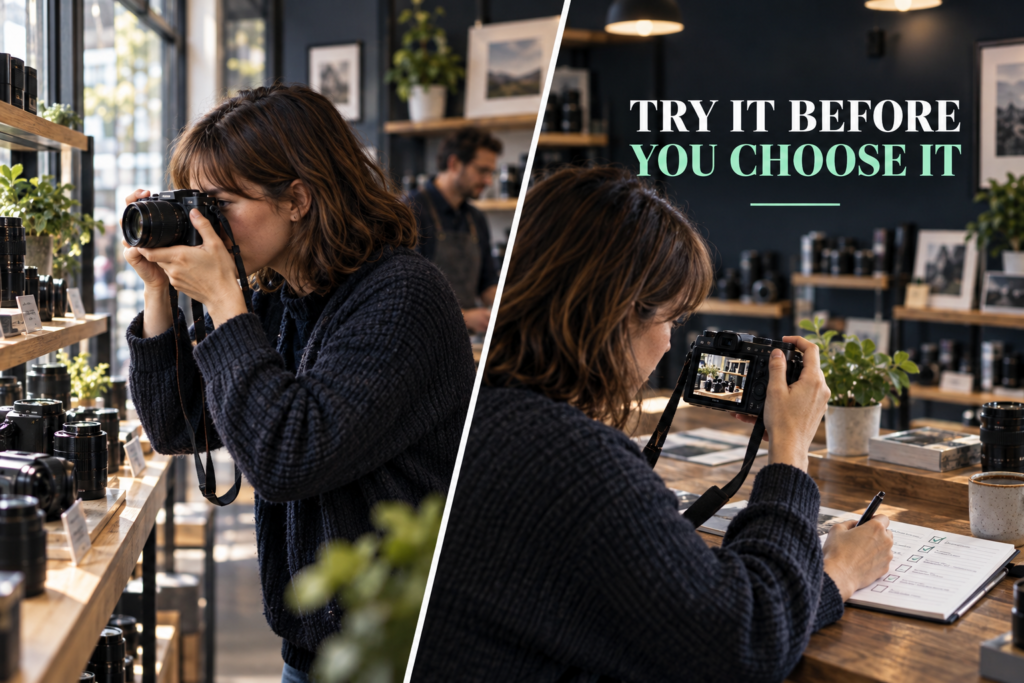
Try two shortlisted kits in a shop, through a rental or by borrowing with permission. Use the same simple tasks for both. This is a personal-fit exercise, not a laboratory performance test.
Give each task 0 if it is uncomfortable or unsuccessful, 1 if you can do it with help, and 2 if you can do it comfortably without help.
| Task | What to observe |
|---|---|
| Hold and frame | Can you support the camera and lens without awkward finger placement? |
| Use the viewfinder | Can you see the frame clearly, including while wearing your glasses? |
| Change exposure | Can you find exposure compensation and recognize its effect? |
| Choose focus | Can you select a subject or focus area intentionally? |
| Review a photograph | Can you enlarge the image and check where focus landed? |
| Complete your intended action | Can you make your typical photo, or record and review a short clip? |
Add the scores for a maximum of 12. The total organizes your observations; it is not a universal camera rating. A zero on something essential matters more than a higher total elsewhere.
For example, a hypothetical Kit A scores 10/12 but is uncomfortable to hold, while Kit B scores 9/12 and completes every essential task comfortably. Kit B may be the better purchase for that person.
Keep the sample files where the shop permits it. Inspect them later at your intended viewing size rather than relying only on the camera display.
7. Check video requirements separately
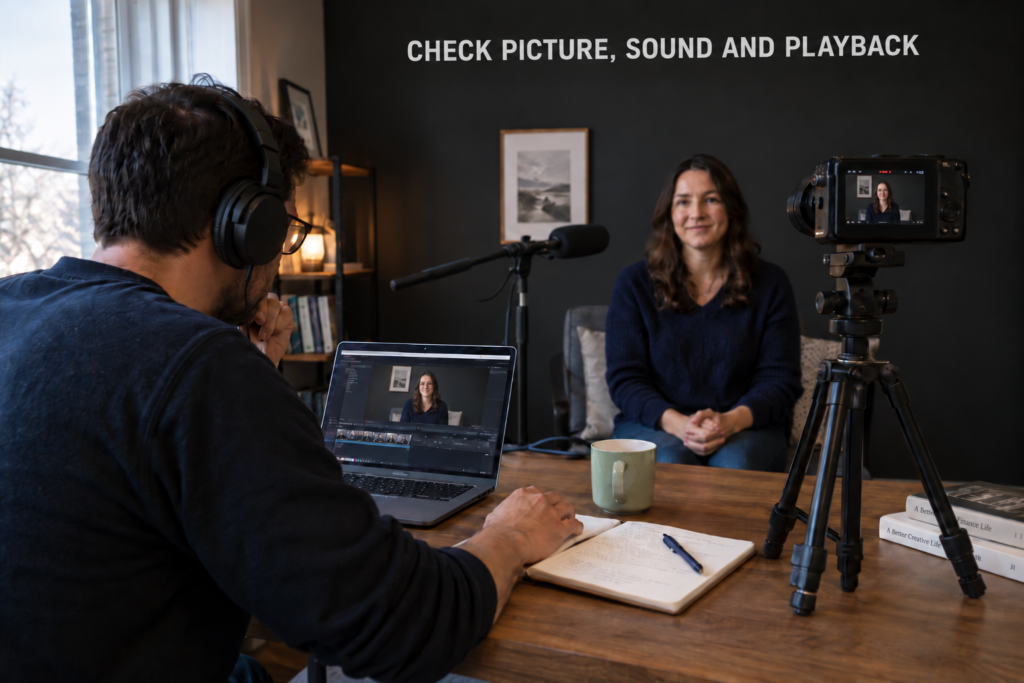
“Shoots 4K” does not describe the complete recording experience. Confirm the frame rate, crop, recording conditions, sound connections and whether your computer can edit the chosen files.
Make a short test at the distance you expect to use. A cropped mode narrows the field of view, which can matter in a small room. Listen to the actual recording, not just the sound you remember hearing on location.
If you need a long uninterrupted recording, read the manual’s limits and test the planned settings, power supply, card and temperature conditions. Never interpret a headline recording specification as a promise that the camera will run indefinitely.
Start with a manageable delivery format. Advanced recording modes are useful when you understand the workflow they require.
For support selection, see the Pixanded tripod guide. If you are preparing for client work, the first freelance videography project guide explains the wider planning, sound, editing and delivery responsibilities.
8. Compare new and used offers fairly
A used camera can expand your options, but compare the complete offer rather than the headline saving.
Ask for the exact model, condition, included accessories, repair history where available, return terms and any warranty. Inspect the lens for damage and test the controls, card slot, screen, viewfinder and connections you need.
Take several photographs, review them at useful magnification and test autofocus. A shutter count can provide context where available, but it does not describe every aspect of condition or past use.
If you cannot assess the equipment yourself, consider an inspection service or a seller with a clear return process. Check who will handle a repair in your country before buying an imported kit.
A functioning DSLR you already own can still be a learning tool. Whether to buy a used DSLR or a mirrorless kit depends on the actual lens, condition, handling and price—not a blanket claim that one category wins every comparison.
9. Three examples of how the decision changes
Daylight travel: A beginner wants landscapes, street details and occasional portraits during walks. They shortlist the R50 and X-T30 III, price a suitable zoom for each and choose using their carrying and handling trials. They do not need to buy a long telephoto simply because it appears in a bundle.
Indoor family activity: Another beginner mainly photographs people moving indoors. They check the lens and test a shutter speed that records the movement acceptably. Stabilization alone does not solve subject blur; lighting and lens choice may change the budget.
Photo and talking-head video: A third beginner wants photographs plus recorded explanations at a desk. They compare a forward-facing screen, sound monitoring, room framing and a test export. Their shortlist may shift toward the Z50II or X-S20 if those features justify the total kit cost.
These are hypothetical decision examples, not reports of camera tests or customer outcomes.
10. Make the final purchase check
Before ordering, confirm that:
The model name and generation match your research.
The lens is included where expected and is compatible.
The complete price fits your spending ceiling.
The kit completes your essential handling tasks.
You understand the relevant video and stabilization limitations.
The seller’s return and warranty arrangements are clear.
You have a first photography assignment planned.
After purchase, repeat that assignment before adding more equipment. Record the limitation you encounter and decide whether it calls for practice, a settings change or a different tool.
What is the best camera for beginners in 2026?
The Canon EOS R50 is a sensible first comparison for everyday photography with occasional video. The Nikon Z50II, Fujifilm X-T30 III and X-S20 offer different feature combinations. Choose using your subject, lens budget and handling trial rather than assuming one model is best for everyone.
How much should a beginner spend?
Choose a total budget you can comfortably afford, then price the body, lens and essentials together. There is no universal minimum. The $1,000 example above is a budgeting exercise, not a recommended expenditure or a current kit quote.
Do I need full frame?
No. Start from the output, lens and shooting conditions you need. A larger sensor is one design choice, not a requirement for learning exposure, composition and editing.
Is a kit lens enough to start?
It can be, if its framing range and light-gathering ability suit your first assignments. Learn where it limits you before replacing it. “Kit lens” describes how a lens is sold, not one universal level of suitability.
Does stabilization prevent every blurry photograph?
No. It can reduce the effect of camera movement, but subject motion, missed focus and an unsuitable shutter speed can still produce blur.
Should I buy the newest camera?
Only if its advantages matter to your work and justify the complete cost. Compare it with older or used options by condition, compatibility, support and the tasks you need to complete.
Research note: Specifications describe manufacturer-stated capabilities, not guaranteed results. Availability, kit contents and local prices can change. Recheck the exact offer and relevant manufacturer documentation before buying.