If you’re searching for the best lenses for portrait photography, you’re probably trying to achieve one thing: beautiful subject separation, flattering compression, and professional background blur.
As a photographer who has shot portraits ranging from casual outdoor sessions to paid client work, I can confidently say this: your lens choice matters more than your camera body.
In this in-depth guide, we’ll break down the best portrait lenses for beginners, enthusiasts, and professionals, including real-world performance, pros and cons, and who each lens is actually for. This article is designed to help you make a confident buying decision, not just chase specs.
Table of Contents
Why Lens Choice Matters for Portraits
Portrait photography is about:
- Subject isolation
- Background blur (bokeh)
- Facial compression
- Skin tone rendering
- Working distance comfort
While camera sensors help, the lens controls depth, perspective, and character.
Key Specifications (Simplified)
Before choosing the best lenses for portrait photography, understand these:
Focal Length
Common portrait focal lengths:
- 35mm → Environmental portraits
- 50mm → Natural perspective
- 85mm → Classic portrait compression
- 135mm → Strong background separation
Longer focal lengths create more flattering compression.
Aperture (f-stop)
Wide apertures (f/1.2 – f/1.8 – f/2.8) give:
- Creamy background blur
- Better low-light performance
- Strong subject separation
For portraits, f/1.8 is often the sweet spot for price vs performance.
Aperture plays a massive role in background blur and subject separation. If you’re still unsure how f/1.8 compares to f/2.8 in real-world shooting, we recommend reading our beginner-friendly breakdown of understanding aperture in photography before choosing your lens.
Autofocus Performance
Critical for:
Professional consistency
Eye focus accuracy
Moving subjects
Best Lenses for Portrait Photography (Beginner to Pro)
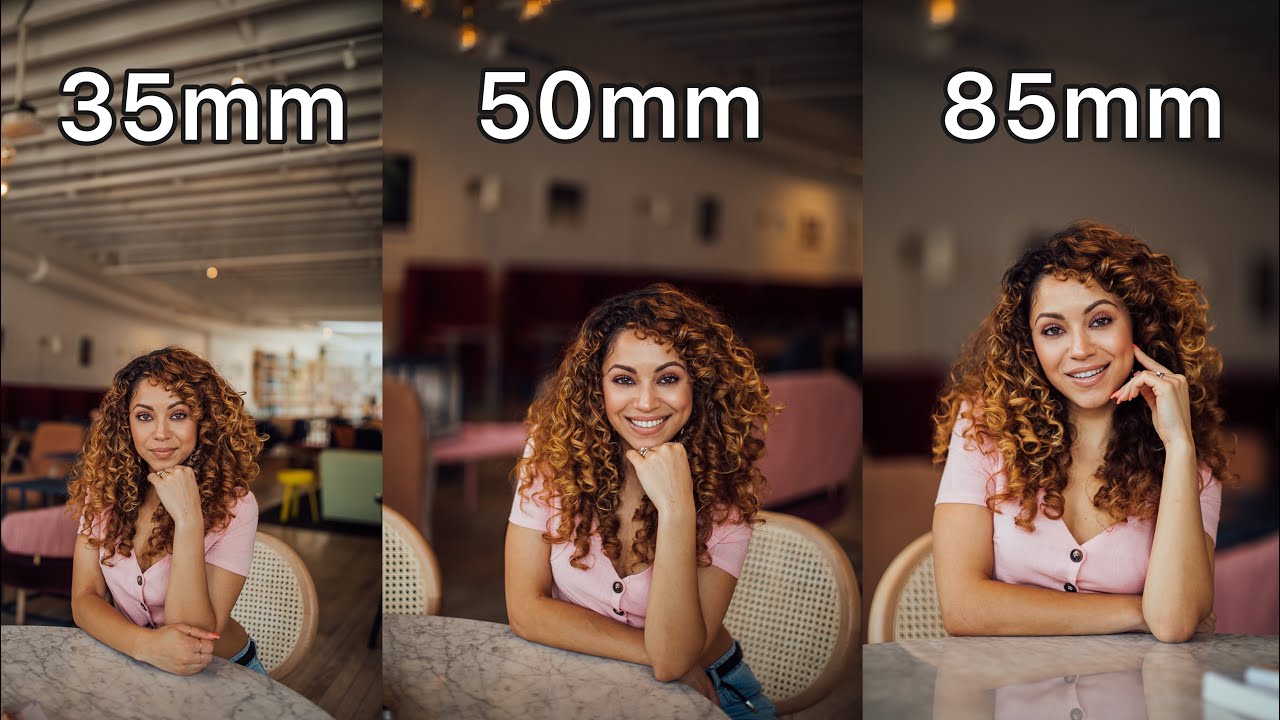
As explained by Jessica Whitaker in her video, the picture above clearly shows that if we compare 35mm vs 50mm vs 85mm lenses for Portrait Photography, the 85mm portrait lens example has a strong background blur.
1. 50mm f/1.8 (Best Budget Portrait Lens)
Why it’s popular
Often called the “nifty fifty,” this is the best entry-level portrait lens.
Key Specs:
- Focal Length: 50mm
- Aperture: f/1.8
- Lightweight
- Affordable
Real-World Performance
- Natural perspective
- Great for indoor portraits
- Sharp center performance
- Affordable for beginners
Ideal For:
- Beginners
- Budget-conscious creators
- Hybrid shooters
2. 85mm f/1.8 (Classic Portrait Lens)
This is where portraits start looking “professional.”
Key Specs:
- Focal Length: 85mm
- Aperture: f/1.8
- Excellent compression
Real-World Performance
- Flattering facial compression
- Creamy bokeh
- Ideal working distance
- Strong subject isolation
This is arguably the best value portrait lens for serious photographers.
3. 85mm f/1.4 (Professional Level)
For professionals who want:
- Ultra-shallow depth of field
- Premium optical quality
- High-end build
Performance
- Incredible subject separation
- Beautiful background rendering
- Sharp, even wide open
Higher cost — but noticeable difference for paid work.
4. 70-200mm f/2.8 (Versatile Portrait Zoom)
The workhorse lens for professionals.
Why It’s Powerful
- Multiple focal lengths
- Stunning compression at 200mm
- Event & wedding flexibility
Downside: heavy and expensive.
5. 35mm f/1.4 (Environmental Portrait Option)
For storytelling portraits.
Best For:
- Lifestyle photography
- Street portraits
- Documentary-style work
Shows more background context.
Performance & Real Use Cases
Let’s compare in real shooting situations.
Outdoor Golden Hour Portraits
Best choice:
- 85mm f/1.8
- 70-200mm at 135–200mm
Why?
Background melts beautifully.
Indoor Low Light Portraits

Best choice:
- 50mm f/1.8
- 85mm f/1.4
Wide apertures help keep ISO lower.
Professional Client Sessions
Best choice:
- 85mm f/1.4
- 70-200mm f/2.8
Clients notice compression and background separation.
Content Creation / YouTube
Best choice:
- 35mm f/1.4
- 50mm f/1.8
Better for tighter spaces.
Pros & Cons
50mm f/1.8
Pros
- Affordable
- Lightweight
- Great starter lens
Cons
- Less compression
- Not as a premium build
85mm f/1.8
Pros
- Classic portrait look
- Strong compression
- Excellent price-to-performance
Cons
- Requires more working distance
70-200mm f/2.8
Pros
- Extremely versatile
- Professional results
- Event-friendly
Cons
- Heavy
- Expensive
Great lenses matter, but technique matters even more. Even the best lenses for portrait photography won’t fix stiff body language or awkward hands. If you want your images to feel natural and confident, read our step-by-step guide on how to take sharp photos in low light to elevate your results immediately.
Who Should Buy What (And Who Shouldn’t)
Beginners
Buy:
- 50mm f/1.8
Avoid:
- Expensive f/1.4 primes at start
Intermediate Photographers
Buy:
- 85mm f/1.8
Avoid:
- Ultra-wide lenses for pure portrait work
Professionals
Buy:
- 85mm f/1.4
- 70-200mm f/2.8
Avoid:
- Entry-level kit lenses
Alternatives & Comparisons
50mm vs 85mm for Portraits
50mm:
- More natural
- Better indoors
85mm:
- More flattering
- Stronger background blur
If shooting tight headshots → 85mm wins.
If shooting lifestyle portraits → 50mm works well.
Prime vs Zoom for Portraits
Primes:
- Sharper
- Wider apertures
- Lighter
Zooms:
- More flexibility
- Better for events
Portrait Lens Comparison Table (Beginner → Pro)
| Lens | Mount | Focal Length | Aperture | Weight | Best For | Skill Level |
|---|---|---|---|---|---|---|
| Canon RF 50mm f/1.8 STM | Canon RF | 50mm | f/1.8 | 160g | Budget portraits, everyday shooting | Beginner |
| Sony FE 85mm f/1.8 | Sony E | 85mm | f/1.8 | 371g | Outdoor portraits, creamy bokeh | Beginner–Intermediate |
| Nikon Z 85mm f/1.8 S | Nikon Z | 85mm | f/1.8 | 470g | Sharp studio & natural light portraits | Intermediate |
| Sigma 85mm f/1.4 DG DN Art | Sony E / L-Mount | 85mm | f/1.4 | 630g | Professional shallow depth-of-field | Advanced–Pro |
| Canon EF 70–200mm f/2.8L IS III USM | Canon EF | 70–200mm | f/2.8 | 1480g | Events, compressed background portraits | Pro |
| Sony FE 135mm f/1.8 GM | Sony E | 135mm | f/1.8 | 950g | Ultra-compressed high-end portraits | Pro |
FAQ
-
What focal length is best for portrait photography?
85mm is widely considered the best focal length for classic portraits.
-
Is 50mm good for portraits?
Yes. It’s affordable, versatile, and great for beginners.
-
Do I need f/1.4 for professional portraits?
Not necessarily. f/1.8 delivers excellent results at a lower cost.
-
Is 70-200mm good for portraits?
Yes. It’s extremely versatile and offers strong compression.
-
Are expensive lenses worth it?
For paid work, better optics and build quality improve consistency.
Quick Buying Guide
On a tight budget?
Go for a 50mm f/1.8 for your camera mount. It’s affordable, lightweight, and produces beautiful background blur.
Want the “classic portrait look”?
An 85mm f/1.8 is the safest, most versatile choice.
Shooting professionally?
An 85mm f/1.4 or 135mm f/1.8 delivers superior background separation and subject compression.
Shooting weddings or events?
A 70–200mm f/2.8 gives flexibility and stunning compression.
Final Buying Advice
If you’re just starting:
👉 Buy a 50mm f/1.8.
If you want professional-level portraits without overspending:
👉 Buy an 85mm f/1.8.
If you shoot weddings, events, or high-end client work:
👉 Invest in an 85mm f/1.4 or 70-200mm f/2.8.
Remember, lighting and posing matter just as much as lens choice.
Choose based on:
- Your shooting space
- Your subject distance
- Your budget
- Your long-term goals
Master your lens, and your portraits will instantly level up.