Low-light photography is a challenge for many creators, but it’s also an opportunity to enhance your images if you know how to approach it. Common issues in low light include soft focus, motion blur, digital noise, and missed moments. The good news is that you don’t need to invest in a new camera to overcome these challenges.
In this practical guide, you’ll learn how to take sharp photos in low light using a repeatable, experience-tested workflow. We’ll cover exactly what to set, what to stabilize, what to avoid, and how professionals consistently walk away with sharp images even after sunset. Whether you shoot portraits, street, events, or cinematic stills for content creation, you’ll be able to apply these techniques immediately.
Table of Contents
What You Need Before Starting
Before touching your camera settings, let’s make sure your foundation is solid. Sharp low-light photos start before you press the shutter.
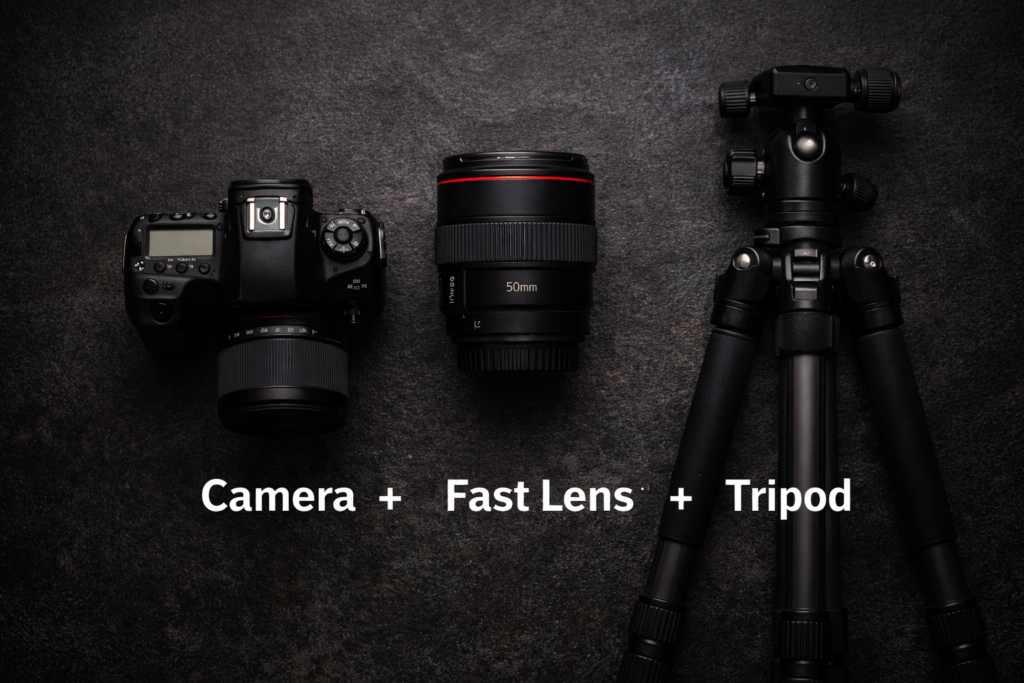
1. A Camera That Handles High ISO
(If you are a beginner, don’t forget to check our article about What Is ISO in Photography?)
You don’t need a flagship body, but your camera should allow:
- Manual or semi-manual modes (M, Av/A, S/Tv)
- ISO control up to at least ISO 3200
- RAW file shooting (highly recommended)
Modern APS-C and full-frame cameras perform well in low light. Micro Four Thirds can also work with good technique.
2. A Fast Lens (Most Important)
Lens speed matters more than camera brand.
Recommended:
- f/1.8 prime (35mm, 50mm)
- f/2.8 zoom (24–70mm, 16–35mm)
Wider apertures let in more light, allowing faster shutter speeds and lower ISO—key for sharpness.
3. Stabilization Tools
- Tripod (even a small one)
- Camera or lens image stabilization (IBIS / OIS)
- A stable surface (wall, table, ground)
4. Clean Technique
- Steady grip
- Controlled breathing
- Smooth shutter press
Sharp photos are 50% settings and 50% technique.
How to Take Sharp Photos in Low Light (Step-by-Step)
The idea is not about how to take sharp photos in low light, but rather on the correct workflow that professionals utilize when light is limited.
Step 1: Choose the Right Camera Mode
Use one of these modes:
- Aperture Priority (A / Av) – Best for beginners
- Manual (M) – Full control for consistent results
Avoid Auto mode—it prioritizes brightness, not sharpness.
Step 2: Set Your Aperture First
Start wide to let in maximum light:
- f/1.8 – f/2.8 for portraits & detail shots
- f/2.8 – f/4 for street and scenes
Don’t always shoot wide open if your lens is soft at max aperture. Slightly stopping down (e.g., f/2 instead of f/1.8) can improve sharpness.
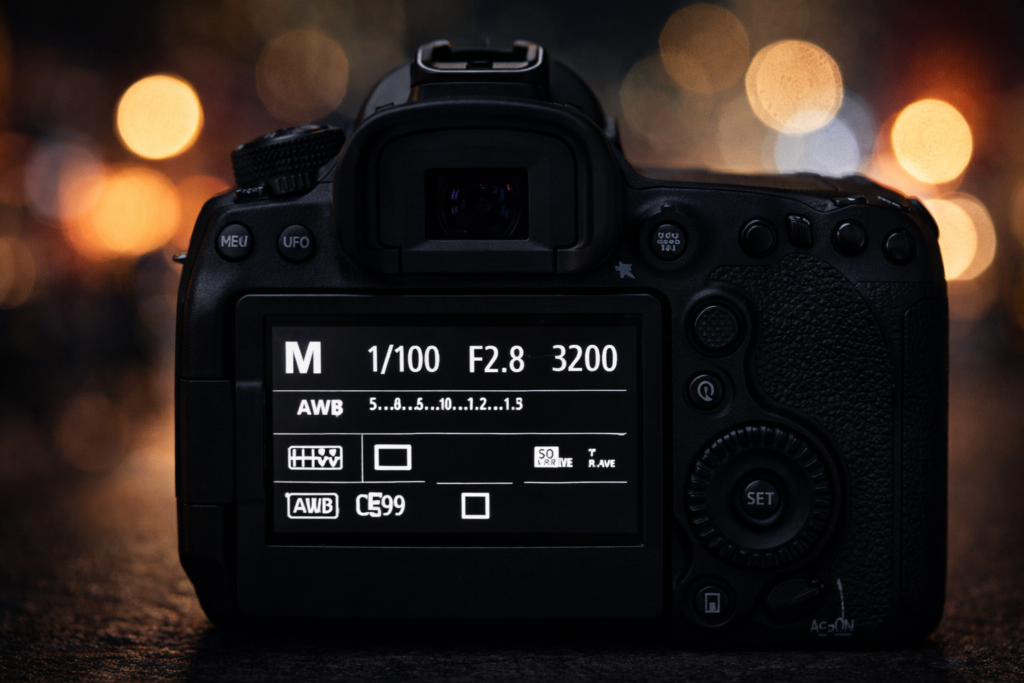
Step 3: Lock a Safe Shutter Speed
To avoid motion blur:
Rule of thumb:
- Shutter speed ≥ 1 / focal length
Examples:
- 35mm → 1/40s or faster
- 50mm → 1/60s or faster
- 85mm → 1/100s or faster
If your subject is moving, double these values.
Step 4: Raise ISO Only as Needed
ISO is not your enemy—blur is.
Start low and increase gradually:
- ISO 400 → indoor evening
- ISO 800–1600 → street/night
- ISO 3200–6400 → events, movement
Modern noise reduction handles grain better than motion blur.
Step 5: Focus Precisely
Low light exposes weak autofocus.
Use:
- Single-point AF
- Eye AF for portraits
- Manual focus with focus peaking (if available)
Focus, recompose carefully, and avoid focus hunting.
Step 6: Stabilize the Camera
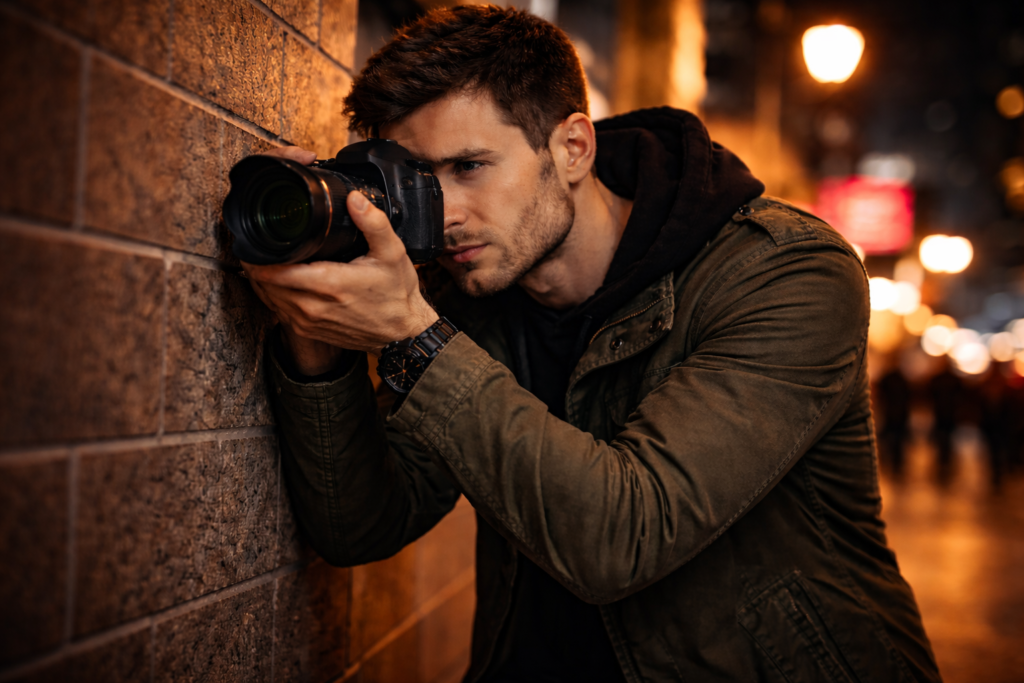
If you don’t have a tripod:
- Lean against a wall
- Rest your elbows on your body
- Exhale slowly before shooting
Enable image stabilization when handholding.
Step 7: Shoot Multiple Frames
Take 2–3 shots of the same composition.
Micro-movements can ruin one frame but not the next.
Camera Settings & Workflow Tips
Recommended Starting Settings
Handheld Portrait (Low Light):
- Aperture: f/1.8–f/2.2
- Shutter: 1/80s
- ISO: 800–1600
- Focus: Eye AF
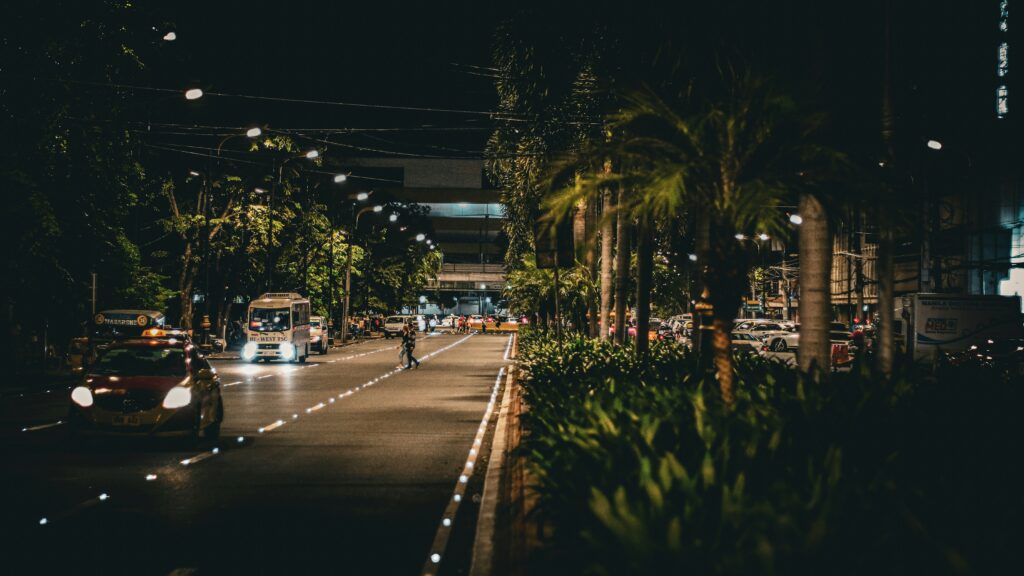
Street Photography at Night:
- Aperture: f/2–f/2.8
- Shutter: 1/125s
- ISO: 1600–3200
- Focus: Single-point AF
Tripod Scene (No Movement):
- Aperture: f/5.6
- Shutter: 1–10s
- ISO: 100
- Focus: Manual
Shoot RAW Always
RAW files preserve:
- More detail
- Better noise reduction
- Higher dynamic range
This is critical for low-light sharpness.Use Burst Mode Strategically
Short bursts increase keeper rate without changing exposure.
Real-World Mistakes to Avoid

1. Using Too Slow Shutter Speeds
Even stabilized cameras can’t freeze subject movement.
2. Fear of High ISO
Grain is fixable. Blur is not.
3. Relying on Auto ISO Blindly
Set ISO limits to prevent extreme noise.
4. Ignoring Focus Accuracy
Missed focus = soft image, no matter the settings.
5. Shooting Wide Open Without Testing Your Lens
Some lenses are soft at max aperture—test yours.
Pro Tips to Improve Results
Use Light Sources Creatively
- Street lamps
- Shop windows
- Car headlights
- Phone flashlight (for focus assist)
Position subjects toward light, not away from it.
Underexpose Slightly
Expose for highlights, then lift shadows in post.
This reduces noise and preserves sharpness.
Black & White Conversion
Noise looks intentional in monochrome images.
Perfect for low-light street photography.
Post-Processing Sharpening Workflow
- Noise reduction first
- Texture/clarity lightly
- Sharpen only edges
Avoid global over-sharpening.

How do I take sharp photos in low light without a tripod?
Use a fast lens, a safe shutter speed, a higher ISO, and strong stabilization techniques like bracing your body.
Why are my low-light photos blurry even with high ISO?
Your shutter speed is likely too slow, or your focus missed the subject.
Is image stabilization enough for night photography?
It helps with camera shake, but cannot freeze subject motion.
What ISO is too high for low-light photography?
There is no “too high”—only unacceptable blur. Modern cameras handle ISO 3200–6400 well.
Conclusion
Mastering sharp low-light photography requires control, not luck. By understanding aperture, shutter speed, ISO, focus, and stabilization, we can really answer the question of how to take sharp photos in low light, and you can shoot confidently in nearly any lighting condition.
Apply this workflow consistently, and your night images will instantly look more professional.
At Pixanded, we believe mastering the basics is the fastest path to professional results.